

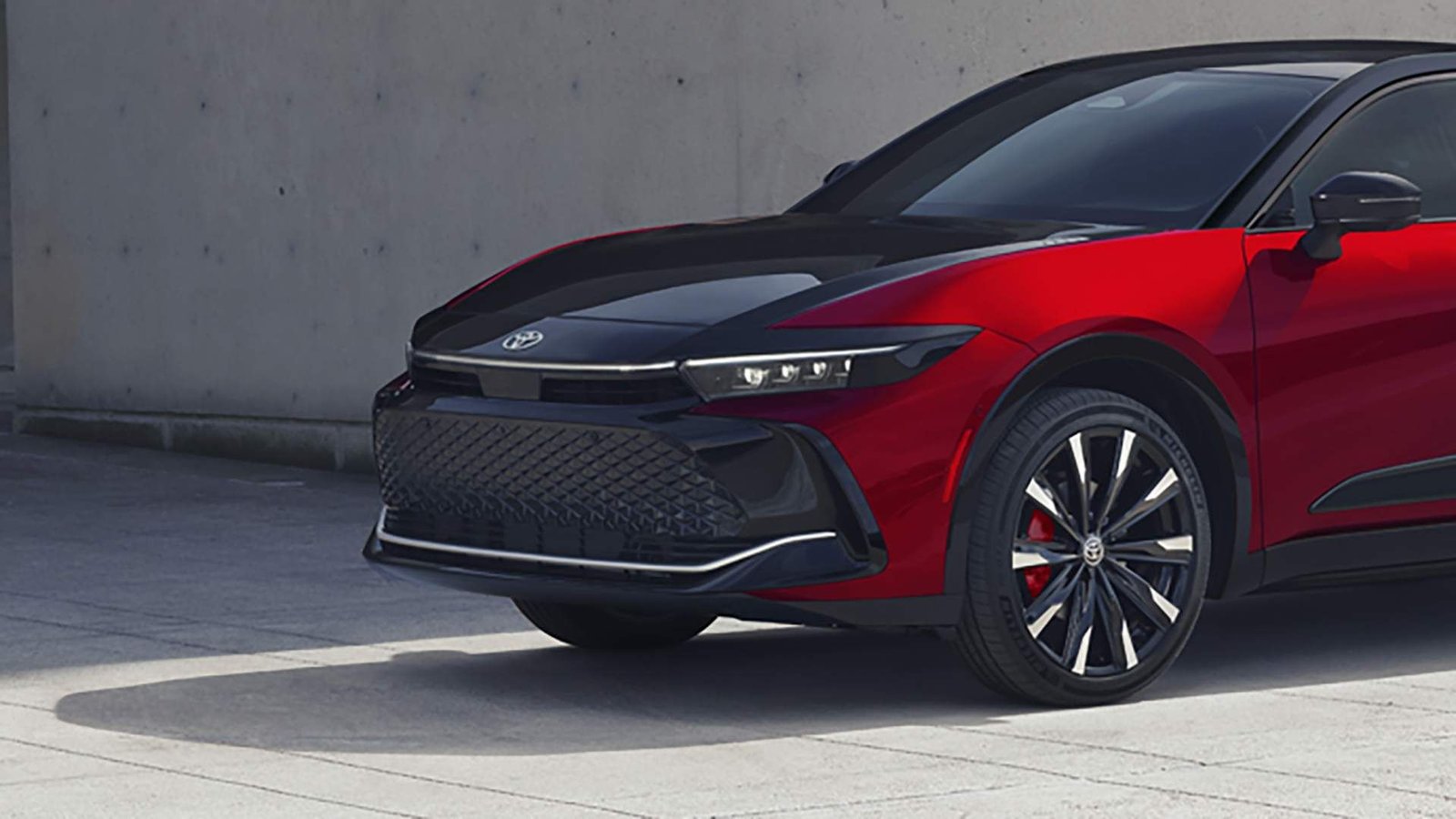
Toyota vient de mettre à jour l’une des voitures les plus atypiques de sa gamme américaine. La Toyota Crown 2027 adopte le système hybride Toyota de cinquième génération sur les versions XLE, Limited et Nightshade, reçoit quelques retouches de style et gagne une quantité importante d’équipements supplémentaires. Sur le papier, il s’agit donc d’une évolution de milieu de carrière logique. Mais un chiffre attire immédiatement l’attention : malgré le nouveau groupe motopropulseur, la consommation officielle combinée passe de 41 à 40 mpg, soit environ 5,7 à 5,9 l/100 km.
C’est précisément ce qui rend cette Crown intéressante. À une époque où chaque nouvelle génération de technologie hybride est généralement associée à davantage de puissance ou à une consommation réduite, Toyota semble avoir privilégié d’autres qualités ici, notamment la réponse à l’accélérateur et l’agrément de conduite. MotorTrend souligne également que la puissance reste inchangée à 236 ch et que les performances annoncées évoluent à peine.
Derrière cette petite anomalie technique se cache une question bien plus importante pour les acheteurs : la Crown 2027 est-elle réellement meilleure que sa devancière ?
Ce qu’il faut savoir
Pour approfondir le choix d’une motorisation hybride, consultez aussi notre article sur le Toyota RAV4 2026 et notre guide sur les motorisations hybrides, hybrides rechargeables et électriques.
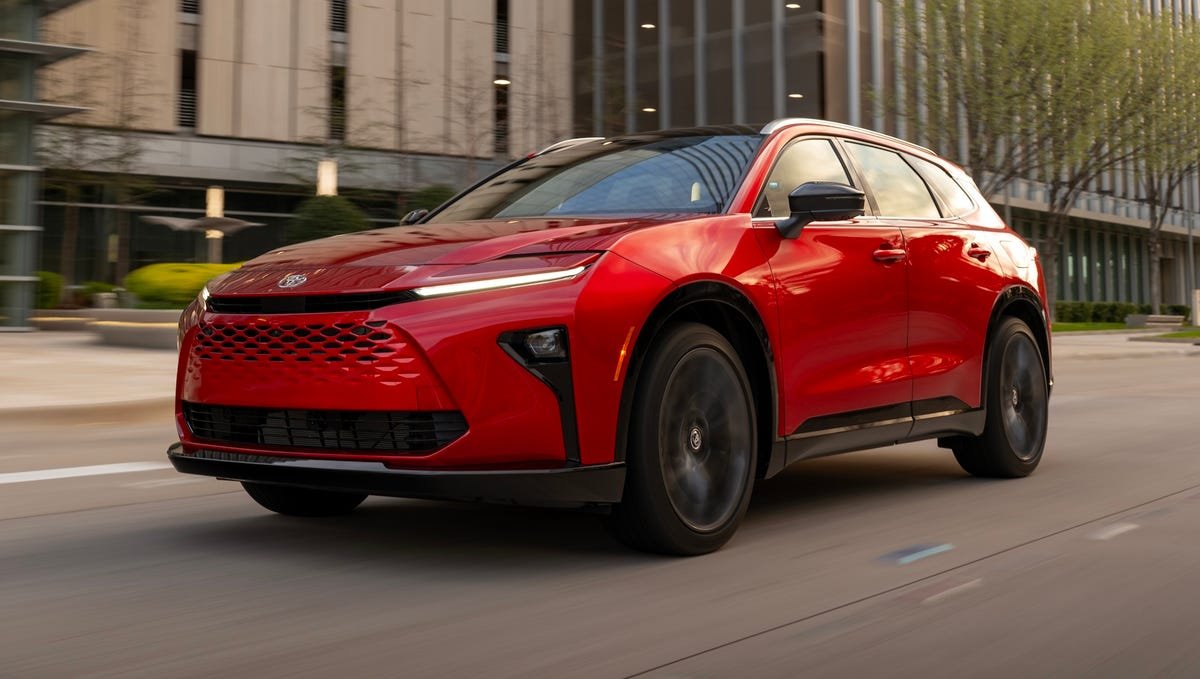
Toyota a officiellement dévoilé la Crown 2027 aux États-Unis le 23 juillet 2026. La gamme conserve quatre finitions : XLE, Limited, Nightshade et Platinum. Toutes disposent de la transmission intégrale, mais deux systèmes hybrides très différents continuent de coexister.
Les XLE, Limited et Nightshade passent au système hybride Toyota de cinquième génération, ou THS 5. Il associe un moteur essence quatre cylindres de 2,5 litres à des moteurs électriques avant et arrière ainsi qu’à une transmission à variation continue. Le système de transmission intégrale utilise un moteur électrique séparé sur l’essieu arrière, ce qui évite d’avoir recours à un arbre de transmission mécanique conventionnel vers les roues arrière.
Selon MotorTrend, la puissance combinée reste de 236 ch, soit exactement le même niveau que précédemment. La publication indique également que le 0 à 60 mph reste annoncé à 7,6 secondes, même si un précédent essai de la Crown avait permis d’effectuer l’exercice plus rapidement.
La Crown Platinum conserve quant à elle le groupe motopropulseur Hybrid MAX : un quatre cylindres 2,4 litres turbocompressé, une assistance hybride, une boîte automatique à six rapports et une transmission intégrale électronique. Le résultat est nettement plus musclé, avec 340 ch et 400 lb-pi de couple, soit environ 542 Nm.
Toyota Crown 2026 vs. Toyota Crown 2027
| Caractéristique | Crown 2026 | Crown 2027 |
|---|---|---|
| Système hybride XLE/Limited/Nightshade | THS | THS 5 |
| Puissance | 236 ch | 236 ch |
| Consommation combinée | 41 mpg | 40 mpg |
| Consommation sur autoroute | 41 mpg | 38 mpg |
| Transmission intégrale | De série | De série |
| Palettes au volant | Non | Oui |
| Platinum Hybrid MAX | 340 ch | 340 ch |
Les chiffres Toyota pour 2026 sont de 42 mpg en ville, 41 mpg sur autoroute et 41 mpg en cycle combiné. Pour 2027, MotorTrend annonce 42/38/40 mpg, ce qui signifie que la consommation urbaine reste pratiquement inchangée tandis que la principale différence se concentre sur la conduite autoroutière.
Pourquoi cette évolution est importante
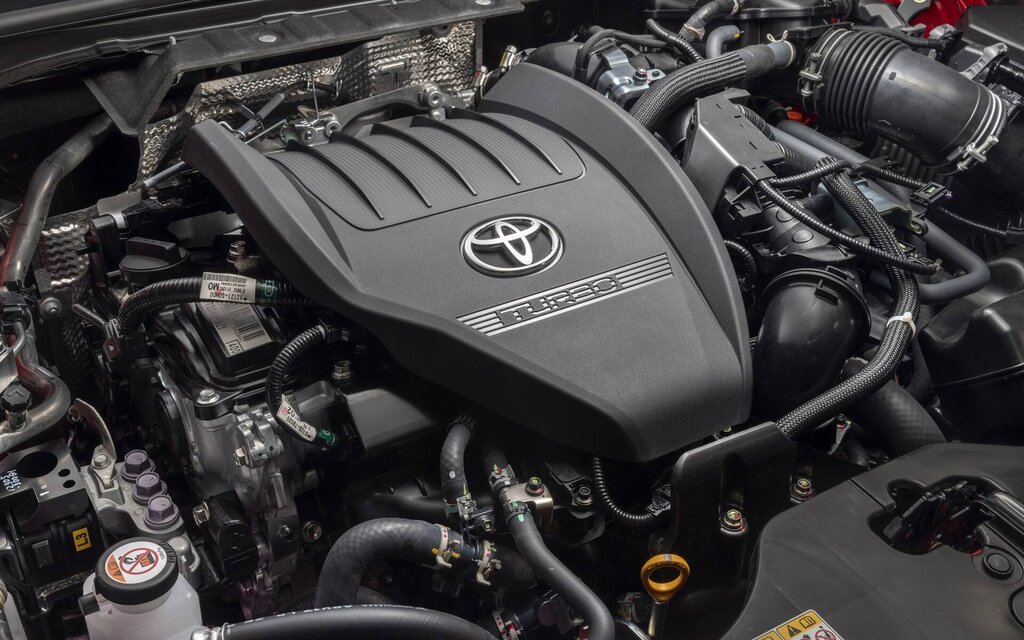
Le passage au THS 5 aurait normalement laissé penser à la possibilité d’une amélioration majeure. Toyota utilise déjà cette génération de technologie hybride sur des modèles plus récents de sa gamme et met en avant une réponse plus directe ainsi qu’un fonctionnement plus fluide pour la Crown 2027.
Mais les chiffres de l’EPA racontent une histoire plus nuancée.
Une technologie plus récente ne se traduit pas forcément par une consommation certifiée plus faible. Dans ce cas, Toyota semble avoir principalement misé sur l’agrément et la réactivité. Cependant, le constructeur n’a pas fourni suffisamment de détails techniques pour déterminer avec certitude si la baisse de l’efficience sur autoroute peut être attribuée à un composant particulier. MotorTrend a lui-même interrogé Toyota sur le sujet, sans obtenir d’explication technique détaillée.
Il faut donc éviter la conclusion trop simple selon laquelle le THS 5 serait simplement « moins bon ». L’écart combiné n’est que d’un mpg et peut résulter de modifications de calibration, des conditions de certification ou d’autres changements associés. En revanche, la baisse de 41 à 38 mpg sur autoroute est suffisamment importante pour mériter une attention particulière lorsque les premiers essais indépendants commenceront à paraître.
C’est d’autant plus intéressant que Toyota occupe actuellement une position très solide sur le marché américain de l’hybride. En 2025, les modèles électrifiés représentaient 47 % des ventes de Toyota Motor North America, avec 1,18 million de véhicules Toyota et Lexus électrifiés vendus sur l’année. La Crown évolue donc dans un environnement où l’hybridation n’est plus une technologie de niche, mais l’un des piliers commerciaux du constructeur.
L’impact pour les conducteurs
Pour les propriétaires, la différence entre 40 et 41 mpg reste modeste. Les conducteurs qui passent la majorité de leur temps en ville pourraient ne remarquer pratiquement aucune différence, puisque le chiffre officiel en cycle urbain reste de 42 mpg selon les données rapportées par MotorTrend.
Les changements les plus perceptibles seront probablement ailleurs.
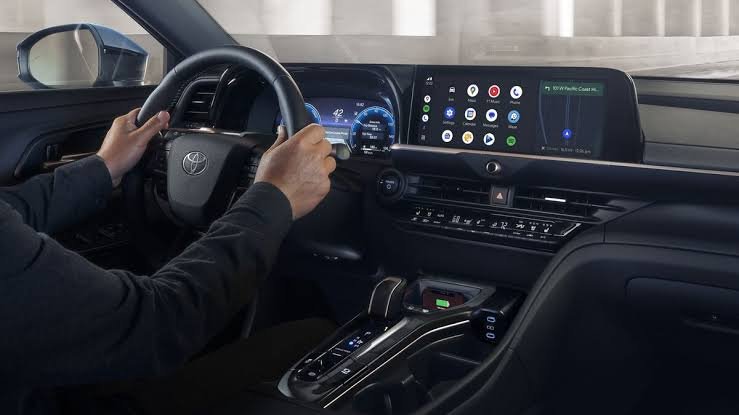
Toyota ajoute des palettes au volant sur les versions équipées du THS 5. C’est un choix inhabituel puisqu’elles restent associées à une transmission à variation continue plutôt qu’à une boîte classique avec des rapports fixes. Leur présence montre néanmoins que Toyota souhaite offrir davantage d’interaction au conducteur, un domaine dans lequel la Crown n’a jamais vraiment cherché à rivaliser avec les meilleures berlines sportives.
Le niveau d’équipement progresse également. Toutes les Crown disposent désormais de deux écrans de 12,3 pouces, de sièges avant chauffants et ventilés, de sièges arrière chauffants, d’un volant chauffant ainsi que de la compatibilité sans fil avec Apple CarPlay et Android Auto.
La Limited devient nettement plus chère
C’est probablement le changement le plus important pour les acheteurs.
Toyota annonce les tarifs de base américains suivants, hors frais de traitement et de livraison de 1 295 $ : 41 640 $ pour la XLE, 48 965 $ pour la Nightshade, 49 720 $ pour la Limited et 55 190 $ pour la Platinum.
Par rapport à la Crown 2026, les XLE, Nightshade et Platinum augmentent de seulement 200 $. La Limited, en revanche, passe de 45 950 $ à 49 720 $, soit une hausse de 3 770 $.
Cette augmentation a une explication. Certains équipements auparavant regroupés dans le pack Advanced Technology sont désormais de série. La Limited intègre maintenant notamment une caméra à vision panoramique, une clé numérique, l’assistance au changement de voie, l’alerte de trafic transversal avant et l’assistance dans les embouteillages.
Un détail important reste toutefois à prendre en compte : certaines fonctions connectées, notamment l’assistance dans les embouteillages et la clé numérique, nécessitent un abonnement Toyota Connect actif après la période d’essai et dépendent de la disponibilité du réseau cellulaire. C’est un élément que les acheteurs doivent intégrer au coût de possession à long terme.
Concurrentes et alternatives
La Crown continue d’occuper une position atypique sur le marché, ce qui constitue probablement à la fois sa principale force et sa principale faiblesse.
Toyota l’a conçue comme une berline surélevée, combinant une position de conduite plus haute et une facilité d’accès proche de celle d’un crossover avec les proportions et le comportement routier d’une grande berline. La Crown actuelle a également marqué le retour du nom aux États-Unis après une absence d’environ 50 ans.
Elle possède donc très peu de concurrentes directes.
Lexus ES 350h : la menace vient de la famille
La nouvelle Lexus ES 350h 2026 est probablement l’alternative la plus sérieuse à la Crown Limited et à la Platinum. Elle développe 244 ch, propose désormais la transmission intégrale en option et peut atteindre jusqu’à 46 mpg en cycle combiné avec les roues avant motrices. Son prix de départ annoncé est de 49 700 $ avant les frais de destination.
Autrement dit, lorsqu’une Crown Limited dépasse 49 000 $ avant les frais, les acheteurs commencent à entrer dans le territoire de Lexus. La Toyota conserve néanmoins un style beaucoup plus distinctif et une transmission intégrale de série.
Honda Accord Hybrid : le choix rationnel
La Honda Accord Hybrid 2026 débute à 33 795 $ et développe 204 ch. Selon la finition, Honda annonce jusqu’à 48 mpg en cycle combiné. Pour les conducteurs qui recherchent avant tout une grande berline hybride efficace et confortable, elle est donc nettement moins chère que la Crown.
La Toyota répond avec davantage de puissance, une présentation plus haut de gamme, une position de conduite plus élevée et une transmission intégrale de série.
Toyota Crown Signia : l’alternative la plus logique
Enfin, la principale rivale de la Crown pourrait tout simplement être la Crown Signia. Ce crossover hybride partage la philosophie orientée haut de gamme de la Crown tout en offrant un hayon et jusqu’à 68,8 pieds cubes de volume de chargement lorsque la deuxième rangée est rabattue. Le modèle 2026 affiche environ 38 mpg en cycle combiné et dispose de la transmission intégrale de série, avec un prix débutant à 44 690 $ sur le site américain de Toyota.
Pour une famille, la Signia est objectivement plus pratique. La berline Crown conserve toutefois une silhouette nettement plus distinctive.
À quoi s’attendre ensuite
La Toyota Crown 2027 n’est pas une révolution. Le bouclier arrière a été revu, une nouvelle teinte noire « Inked » fait son apparition, les badges adoptent une finition satinée et la Platinum gagne des étriers de frein rouges ainsi qu’un traitement bicolore légèrement modifié. À l’intérieur, de nouvelles possibilités de sellerie Saddle Tan complètent les changements.
Mais le véritable test viendra avec les premiers essais routiers.
Sur le papier, le THS 5 n’apporte ni puissance supplémentaire ni amélioration de la consommation certifiée. Sa valeur devra donc être mesurée en conditions réelles : meilleure réponse à l’accélérateur, transitions plus douces entre les modes essence et électrique, réduction du caractère parfois monotone associé à une transmission CVT et amélioration générale du raffinement sur la route.
C’est là que la Crown 2027 pourrait encore justifier cette évolution.
Car au final, l’élément le plus intéressant de cette voiture n’est pas la baisse d’un mpg. C’est la stratégie de Toyota. Plutôt que de transformer la Crown en un SUV de plus, le constructeur continue de soutenir une grande berline hybride surélevée, axée sur le confort, équipée de la transmission intégrale et volontairement difficile à classer.
Pour les acheteurs, la XLE semble actuellement être la version la plus cohérente, puisque son prix n’augmente que légèrement tout en bénéficiant du nouveau THS 5 et des palettes au volant. La Limited devient beaucoup mieux équipée, mais son prix la rapproche fortement du territoire Lexus. Quant à la Platinum Hybrid MAX, elle reste la Crown à privilégier lorsque les performances comptent davantage que la consommation.
La légère baisse d’efficacité énergétique du millésime 2027 n’est donc probablement pas rédhibitoire. Mais elle crée une attente légitime : Toyota devra démontrer sur la route ce que son nouveau système hybride fait mieux afin de justifier ce qu’il ne fait plus tout à fait aussi bien à la pompe.