

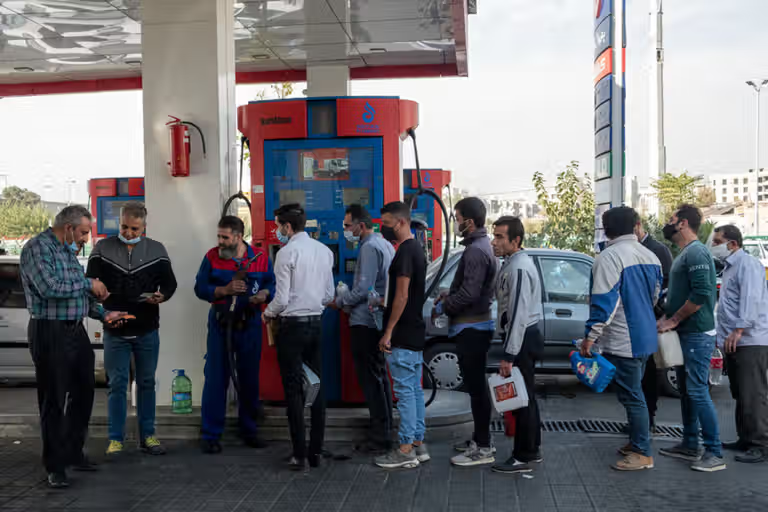
La recherche soudaine de carburants importés par la Russie crée une nouvelle difficulté pour l’Iran, déjà confronté à un déficit d’essence, à des routes commerciales contraintes et à une forte pression sur son réseau d’approvisionnement.
La concurrence se joue notamment en Asie, où les cargaisons disponibles prennent davantage de valeur à mesure que les perturbations géopolitiques modifient les flux énergétiques traditionnels.
L’Iran fait déjà face à un déficit important
Selon Reza Sepahvand, membre de la commission de l’Énergie du Parlement iranien, le pays produirait environ 105 millions de litres d’essence par jour pour une consommation proche de 135 millions de litres. Le déficit quotidien atteindrait donc environ 30 millions de litres.
Le problème est particulièrement important pour un pays pourtant grand producteur de pétrole brut : ses capacités de raffinage n’ont pas progressé assez vite pour suivre la demande intérieure.
Pourquoi la Russie devient un concurrent plus important
La Russie est traditionnellement un grand exportateur d’énergie. Mais les dommages subis par certaines infrastructures de raffinage à la suite d’attaques ukrainiennes ont poussé Moscou à rechercher davantage d’essence à l’étranger.
Des sources industrielles citées par Reuters indiquaient que la Russie avait commencé à importer de l’essence par voie maritime depuis l’Inde, avec au moins 60 000 tonnes expédiées début juillet. Moscou chercherait jusqu’à 400 000 tonnes par mois auprès de fournisseurs comme l’Inde, la Biélorussie et le Kazakhstan.
L’Inde devient centrale dans le marché asiatique
L’Inde est devenue un fournisseur important dans la réorganisation des échanges énergétiques. Ses exportations de distillats légers et moyens devaient atteindre environ 1,55 million de barils par jour en juillet, contre environ 866 000 en mai selon les données citées par Reuters.
Cette hausse apporte des volumes supplémentaires aux marchés asiatiques, mais les importations régionales de carburants raffinés resteraient inférieures aux niveaux d’avant les dernières perturbations liées aux conflits.
La Russie et l’Iran recherchent parfois les mêmes approvisionnements
L’Iran dépend déjà d’un groupe limité de fournisseurs internationaux en raison des sanctions, des contraintes bancaires et des difficultés de transport. Lorsqu’un acheteur de la taille de la Russie intervient sur le même marché, la concurrence peut augmenter pour l’essence mais aussi pour les navires, les assurances, le financement et les capacités d’exportation des raffineries.
Cela ne signifie pas que chaque achat russe prive directement l’Iran d’une cargaison. Le risque est plutôt celui d’un marché plus tendu et de coûts plus élevés.
La dépendance iranienne aux importations augmentait déjà
Le problème ne date pas des dernières importations russes. Selon un document du ministère iranien du Pétrole cité par Iran International, l’Iran aurait importé près de 5 milliards de litres d’essence et de diesel cumulés pendant l’année iranienne terminée en mars 2025, soit environ deux fois plus qu’un an auparavant.
Le chiffre concerne l’essence et le diesel ensemble, mais il illustre un problème structurel : la consommation intérieure augmente plus vite que la production des raffineries.
Quelles conséquences pour les automobilistes iraniens ?
Une tension accrue sur l’approvisionnement ne se traduit pas nécessairement immédiatement par une hausse spectaculaire des prix officiels, car l’essence reste fortement subventionnée en Iran.
Les premiers signes pourraient plutôt être des quotas plus stricts, une disponibilité variable selon les régions et des files d’attente plus longues dans les stations-service. Le marché parallèle peut également devenir plus attractif lorsque les automobilistes ne parviennent pas à obtenir suffisamment de carburant via le réseau réglementé.
La Russie n’est pas à l’origine de la crise iranienne
Les importations russes ne constituent pas la cause profonde des difficultés iraniennes. Celles-ci résultent d’un ensemble de facteurs : forte consommation intérieure, capacités de raffinage insuffisantes, sanctions, restrictions commerciales et coûts logistiques élevés.
Il n’existe pas non plus de preuve publique indiquant que la Russie détournerait directement des cargaisons destinées à l’Iran. Le risque est plus indirect : Moscou ajoute une source importante de demande sur un marché non occidental dont l’Iran dépend de plus en plus.
Un nouveau point de pression sur le marché asiatique
Les nouveaux flux de carburant entre la Russie et l’Inde montrent à quel point le commerce mondial de l’énergie évolue. Du pétrole russe peut être raffiné en Inde puis revenir sous forme de carburants, tandis que l’Iran recherche sur ces mêmes marchés les produits nécessaires à ses besoins intérieurs.
Pour Téhéran, la question centrale est donc de savoir s’il pourra continuer à obtenir suffisamment de carburant à un coût supportable alors que son déficit de production, ses contraintes logistiques et son accès limité aux marchés internationaux deviennent plus difficiles à gérer.