

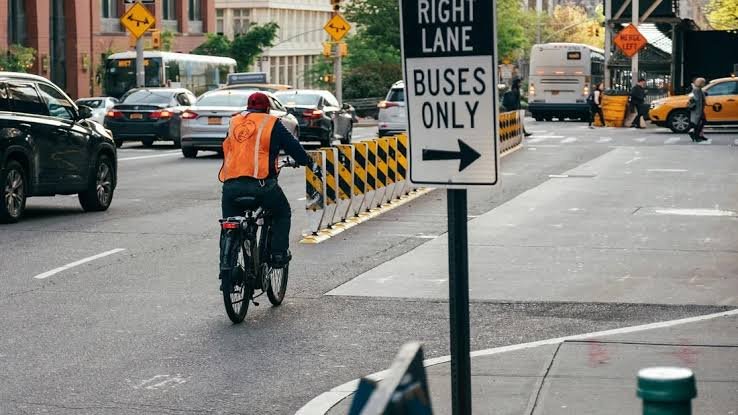
Le vélo prend une place croissante dans les déplacements urbains, mais partager la route avec les voitures, utilitaires et poids lourds reste un défi. Les véhicules modernes disposent de systèmes comme le freinage automatique d’urgence, la surveillance des angles morts et la détection des cyclistes, mais aucune technologie ne supprime tous les risques.
Pour les cyclistes, la sécurité repose donc aussi sur la visibilité, le positionnement et l’anticipation. Voici huit habitudes pratiques.
1. Rendez-vous visible
Utilisez des éclairages avant et arrière lorsque la visibilité est mauvaise et privilégiez des vêtements ou accessoires permettant aux autres usagers de vous repérer. Les feux sont utiles à l’aube, au crépuscule et sous la pluie, pas seulement la nuit.
2. Roulez de manière prévisible
Gardez une trajectoire régulière, évitez les changements brusques et signalez clairement vos changements de direction ou de position. Plus vos intentions sont faciles à comprendre, plus les conducteurs disposent de temps pour réagir.
3. Soyez particulièrement attentif aux intersections
Les intersections concentrent plusieurs trajectoires. Surveillez les véhicules susceptibles de tourner devant vous, d’arriver d’une rue latérale, de changer de voie ou d’accélérer lorsque le feu change. Même lorsque vous avez la priorité, vérifier que le conducteur vous a réellement vu ajoute une marge de sécurité.
4. Évitez les angles morts
Les voitures ont des angles morts, mais ceux des fourgons, bus et poids lourds sont encore plus importants. Évitez de rester longtemps à côté d’un véhicule volumineux, surtout à proximité d’une intersection.
5. Gardez vos distances avec les voitures stationnées
Une portière peut s’ouvrir soudainement. Lorsque les conditions le permettent, gardez une distance suffisante pour éviter la zone d’ouverture des portes. Soyez aussi attentif aux occupants, aux feux stop et aux roues qui commencent à tourner.
6. Ne comptez pas entièrement sur les aides à la conduite
Les caméras et radars peuvent détecter les cyclistes et certains systèmes peuvent déclencher un freinage automatique. Toutefois, la météo, l’obscurité, la vitesse, la position des capteurs et le mouvement du cycliste peuvent limiter la détection.
7. Soyez vigilant autour des hybrides et électriques
À faible vitesse, certains véhicules électriques et hybrides sont plus silencieux qu’une voiture thermique. Les vérifications visuelles sont donc particulièrement importantes dans les sorties de parking, les allées et les intersections.
8. Évitez les distractions et anticipez
Gardez votre attention sur la circulation plutôt que sur un téléphone. Regardez plusieurs secondes devant vous et identifiez les dangers potentiels : véhicules qui tournent, piétons, portières, chaussée dégradée ou voie qui se rétrécit.
À retenir
La stratégie la plus sûre repose sur une conduite défensive et prévisible. Être visible, choisir une position raisonnable sur la chaussée et anticiper les erreurs possibles des autres usagers permet de disposer de davantage de temps pour réagir.