Cybertruck Owner Reports 13,000 Miles With Nearly $0 in Charging Costs — and 17 Nights of Camp Power

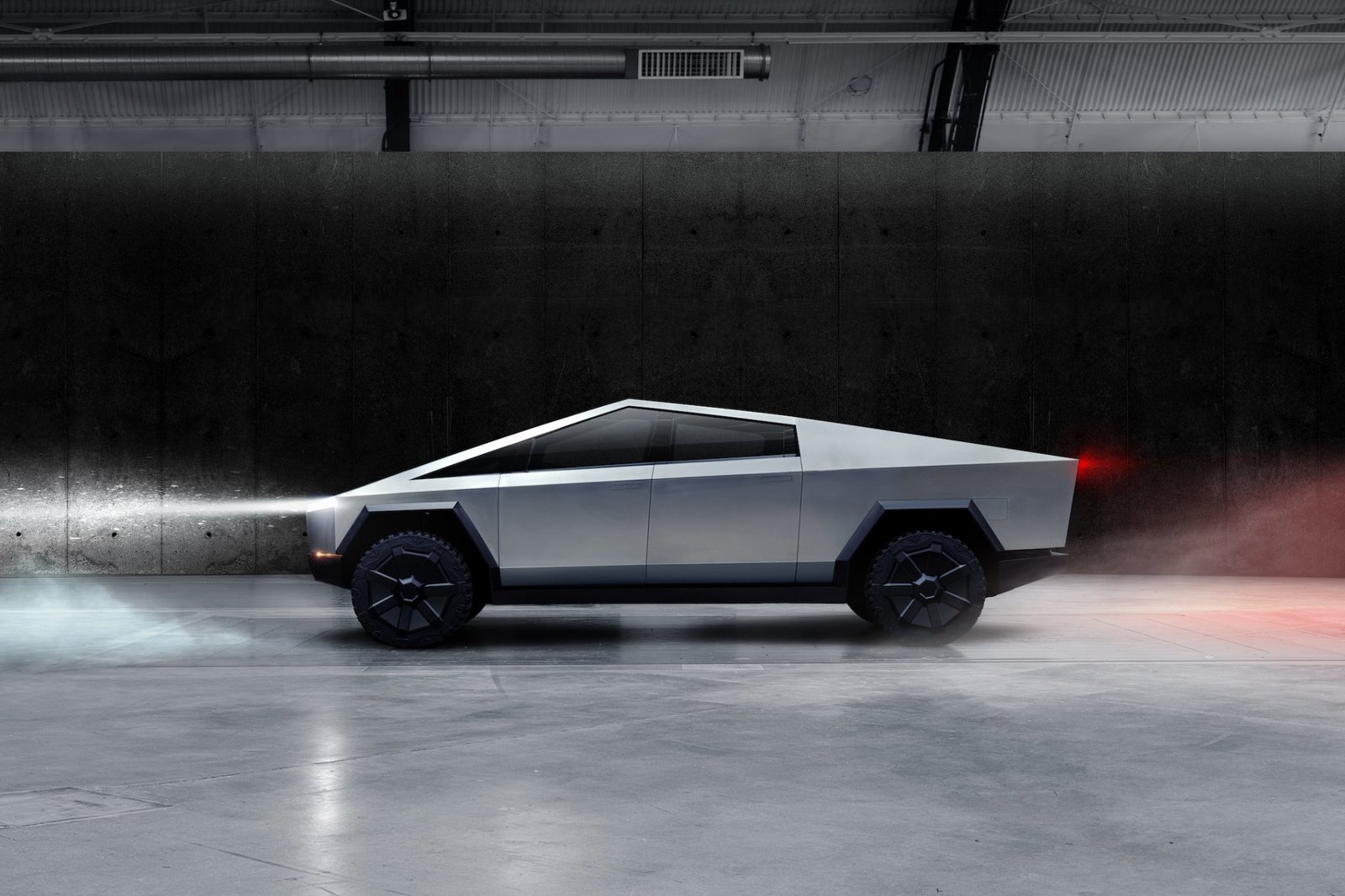
Cybertruck
Cybertruck

A Tesla Cybertruck owner has provided an unusual real-world example of what electric-pickup ownership can look like when free or promotional charging is combined with the vehicle’s ability to function as a large mobile power source.

According to reports published around August 12, 2026, the owner says his Cybertruck has traveled approximately 13,000 miles while generating virtually no direct charging expense and has also provided electricity during 17 nights of camping.

Those figures are striking, but they need an important qualification. They are an individual owner’s reported experience, not a controlled efficiency test, and the exceptionally low charging bill depends heavily on charging benefits that are not available to every Cybertruck buyer.

The camping component, however, reflects hardware Tesla officially builds into certain versions of the truck. Cybertruck All-Wheel Drive and Cyberbeast models can provide electricity from 120-volt and 240-volt outlets, with up to 9.6 kW available through the onboard system.

How a Cybertruck reached 13,000 miles with almost no charging bill

CybertruckCybertruck-Owner-Reports-13000-Miles-for-Nearly Cybertruck Owner Reports 13,000 Miles With Nearly $0 in Charging Costs — and 17 Nights of Camp Power

The headline-grabbing figure is straightforward: roughly 13,000 miles with little or no direct spending on charging.

That does not mean a Cybertruck normally costs nothing to drive.

A previous Torque News report quoted Cybertruck owner Jeff Kincaid as saying that he had chosen a Foundation Series truck in significant part because of a free-Supercharging benefit. At that stage of his ownership, he reported that approximately 13,000 miles had cost him only about $1 in charging.

That context is essential because it separates vehicle efficiency from the price paid for electricity.

A vehicle can consume thousands of kilowatt-hours yet produce a $0 charging receipt if somebody else — an automaker promotion, employer, hotel, business or other provider — covers the electricity.

Conversely, another Cybertruck owner making a long interstate journey can face a substantial bill. In June 2026, for example, Torque News documented an owner who reported spending $1,913.31 on charging while covering 10,396 miles across 35 states.

The comparison shows how dramatically EV operating costs can change depending on where and how a vehicle is charged.

A benefit that other owners may not have

Consumers therefore should not interpret the 13,000-mile figure as an estimate of what they themselves would spend.

Tesla’s current Cybertruck support information does not present unlimited free Supercharging as a universal Cybertruck feature. Its Foundation Series documentation lists a range of equipment and benefits, while Tesla separately notes that some Foundation Series orders received Supercharging credits or other incentives.

Promotional terms can depend on when a vehicle was ordered or delivered.

For prospective buyers, the useful question is consequently not simply, “How much did this owner spend?” It is: What would electricity cost under my own charging pattern?

Someone charging mostly at home will have a different cost profile from a driver relying heavily on public DC fast chargers. A customer with a special free-charging promotion can produce a dramatically different result again.

The more interesting number may be 17 camping nights

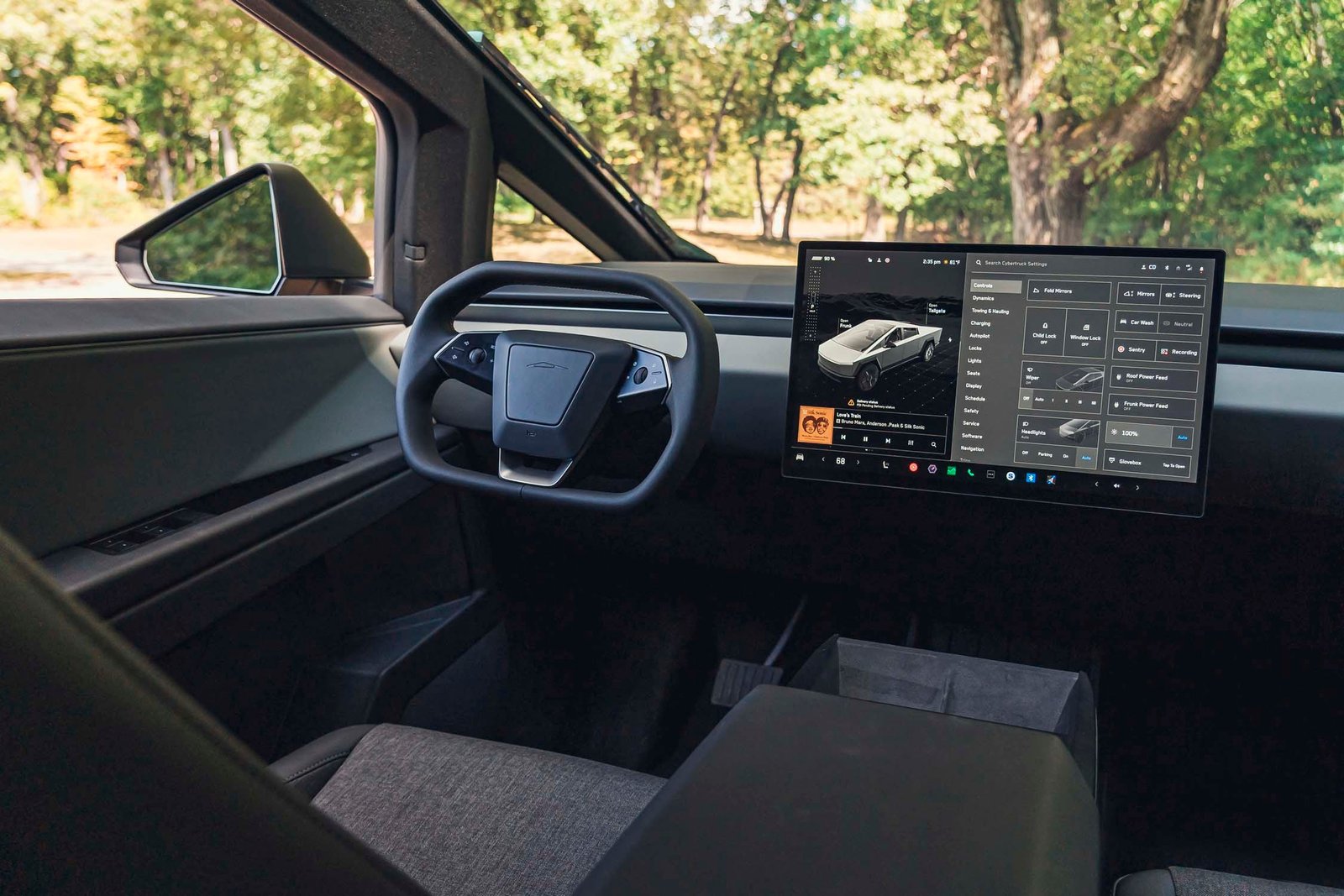
Cybertruck-interior Cybertruck Owner Reports 13,000 Miles With Nearly $0 in Charging Costs — and 17 Nights of Camp Power

The owner’s reported 17 nights of camping powered by the Cybertruck may reveal more about the vehicle’s distinctive utility than the charging bill does.

Unlike a conventional pickup that primarily carries fuel to move itself, a large-battery electric truck can also act as a substantial portable energy source.

Tesla explicitly markets Powershare for uses including campsites, tools, appliances, other electric vehicles and home backup. On appropriately equipped Cybertrucks, there are two 120 V cabin outlets, two 120 V cargo-bed outlets and one 240 V bed outlet. Tesla lists maximum combined outlet power at 9.6 kW.

That means camping equipment can be connected directly to the vehicle without a separate gasoline generator in compatible situations.

The owner report does not, however, provide enough independently verified information to determine exactly how much energy was consumed during those 17 nights. Weather, heating or cooling loads, cooking appliances and other equipment can cause campsite energy requirements to differ considerably.

Cybertruck as a mobile power source

The truck’s capabilities go beyond its regular outlets.

Tesla says Powershare Home Backup can deliver as much as 11.5 kW of continuous power when the Cybertruck is connected to compatible home equipment. Tesla estimates that a fully charged truck can support a typical home for more than three days under its stated assumptions.

Tesla’s current Cybertruck page also lists a 123 kWh battery for configurations associated with Powershare functionality.

For campers and people working away from the electrical grid, that fundamentally changes the role of the vehicle. Energy stored for driving can also operate tools, lights, cooking equipment and other electrical devices.

The practical trade-off is obvious: every kilowatt-hour consumed at camp is energy no longer available for driving. Owners traveling far from charging infrastructure therefore need to preserve sufficient battery capacity to leave the location and reach their next charging point.

What the story does — and does not — prove about EV costs

The 13,000-mile experience illustrates the potential economics of an EV combined with a generous charging program. It does not establish that Cybertrucks inherently cost nothing to fuel.

Another real-world Cybertruck journey makes the distinction clear.

One owner who drove 10,396 miles through 35 states in June 2026 reported 97 Supercharger sessions at 88 locations and spending $1,913.31. That works out to approximately 18.4 cents per mile in reported charging expenditure.

Both experiences can be genuine while producing radically different conclusions.

Confirmed fact: public charging carries a price unless an incentive or third party covers it.

Owner-reported experience: certain buyers with favorable charging arrangements can dramatically reduce their direct energy expense.

Analysis: the strongest economic argument in this case is therefore not simply “EVs are cheaper.” It is that charging access and purchase incentives can be as important as vehicle efficiency when calculating ownership costs.

Tesla’s chief designer still has room for a V8

The second detail surrounding the story creates a striking automotive contrast.

Franz von Holzhausen is best known today as Tesla’s chief designer and the man responsible for the design direction behind vehicles including the Model S, Model 3, Model Y and Cybertruck.

But his career began long before Tesla.

At General Motors, von Holzhausen worked on the concept and production design of the Pontiac Solstice, the compact rear-wheel-drive roadster that reached production for the 2006 model year. Tesla itself highlighted his work on the Solstice when announcing his appointment as chief designer in August 2008.

Contemporary reporting from the Solstice’s development also identifies von Holzhausen as the designer behind the original concept.

Reports surrounding his latest appearance with Jay Leno say the Tesla designer personally owns a V8-powered Solstice, apparently preserving a connection with one of the most recognizable cars from his pre-Tesla career.

That detail should not be interpreted as an ideological contradiction.

Car designers and enthusiasts regularly collect vehicles representing different eras, powertrains and engineering philosophies. In von Holzhausen’s case, a Solstice has an unusually direct personal connection: it represents a major project from his own design career.

Franz von Holzhausen’s connection to the Pontiac Solstice

The production Solstice originally used four-cylinder engines rather than a factory V8.

However, aftermarket companies subsequently installed General Motors V8 engines in the lightweight roadster. Mallett conversions are among the best-known examples, with documented V8-converted Solstices appearing on enthusiast auction platforms.

Without additional documentation, the exact technical specification of von Holzhausen’s reported personal car should not be assumed.

What can be independently established is the much more important historical connection: he helped create the Solstice itself.

That makes the reported ownership less of an “EV designer secretly likes gasoline” story and more of a designer maintaining a physical piece of his own professional history.

Why the two stories matter together

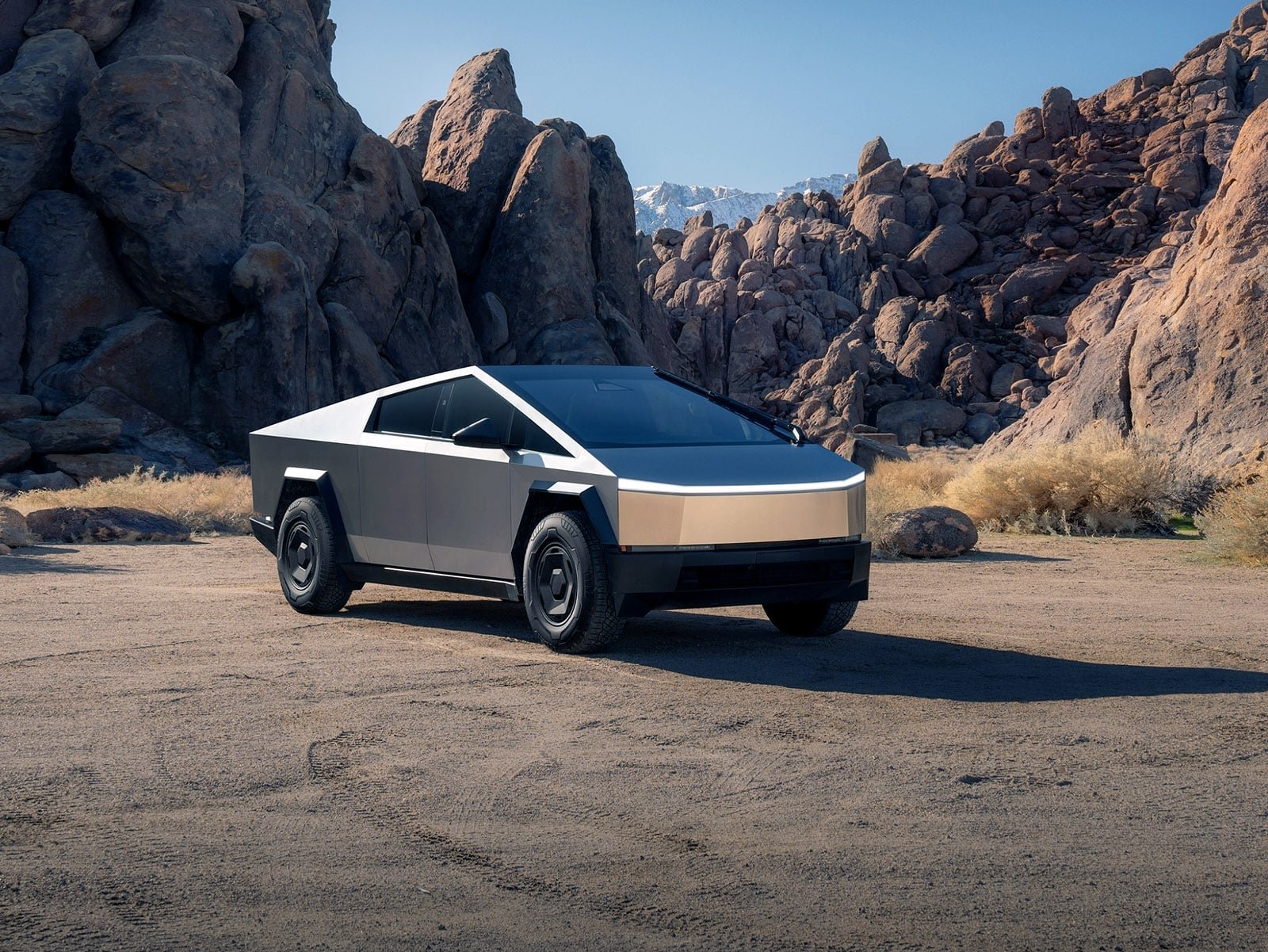
Cybertruck-campings Cybertruck Owner Reports 13,000 Miles With Nearly $0 in Charging Costs — and 17 Nights of Camp Power
Cybertruck-campings

Placed side by side, the Cybertruck owner’s experience and von Holzhausen’s Solstice offer a useful picture of where automotive culture stands in 2026.

Electric vehicles increasingly provide functions combustion vehicles traditionally could not deliver easily, particularly the ability to carry a large reserve of electrical energy and distribute it to tools, campsites or homes.

At the same time, enthusiasm for older combustion-powered cars has not disappeared.

The two technologies can occupy different roles.

A Cybertruck may serve as transportation, mobile electricity storage and camping infrastructure. A V8-powered two-seat roadster can exist primarily because its owner enjoys its design, history or driving character.

For consumers, that distinction is more useful than treating every EV-versus-gasoline story as a winner-takes-all contest.

The numbers in context

Several figures help explain why the owner story has attracted attention:

13,000 miles: the approximate distance the Cybertruck owner says he has covered with essentially no direct charging expense.

17 nights: the reported number of camping nights during which the truck supplied electrical power.

9.6 kW: Tesla’s stated maximum output from the onboard Cybertruck outlets on compatible configurations.

11.5 kW: the maximum continuous output Tesla lists for Powershare Home Backup.

123 kWh: the battery capacity Tesla currently lists in connection with Cybertruck’s Powershare capability.

These figures illustrate a fundamental difference between battery-electric pickups and conventional trucks: energy stored for propulsion can be made available for other uses.

They do not, by themselves, determine whether a Cybertruck is cheaper to own. Purchase price, depreciation, insurance, tires, maintenance and local electricity rates remain part of the broader calculation.

What to watch next

The next useful data from high-mileage Cybertruck owners will be less about spectacular individual cost figures and more about long-term consistency.

Battery degradation, tire replacement, repair frequency, charging prices and resale value will increasingly determine the truck’s real total cost of ownership as early vehicles accumulate more mileage.

Tesla’s Powershare ecosystem is evolving as well. The company is expanding the ways Cybertruck batteries can interact with homes and, in some regions, electrical grids. Tesla says Powershare Grid Support can allow eligible owners to export electricity during periods of high grid demand.

Meanwhile, von Holzhausen remains at the center of Tesla’s future vehicle program. During his latest appearance on Jay Leno’s Garage, he said the long-delayed next-generation Tesla Roadster reveal is coming “very soon,” adding another reason to watch Tesla’s design operation after years of delays surrounding the sports car.

For now, the 13,000-mile Cybertruck story is best viewed as an illustration of what is possible under unusually favorable charging conditions — not a promise that every Cybertruck can travel thousands of miles for free.

Its more durable lesson may be elsewhere: an electric pickup is increasingly being asked to do more than simply move people and cargo. For some owners, it is becoming part vehicle, part power station and part camping infrastructure.

Comments

No comments yet. Why don’t you start the discussion?

    Leave a Reply

    Your email address will not be published. Required fields are marked *