Dodge Charger PPV Previewed for 2027 as Police Sedan Returns

Dodge Charger PPV Previewed for 2027 as Police Sedan Returns

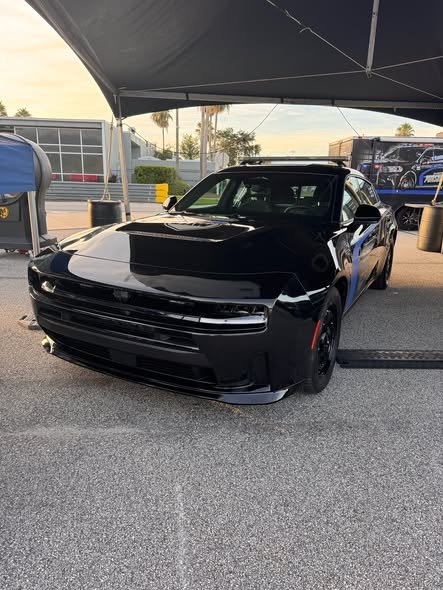
Dodge has taken one of its clearest steps yet toward returning the Charger to American police fleets. A next-generation Dodge Charger PPV, or Police Pursuit Vehicle, was displayed in connection with the 2026 Police Fleet Expo, where fleet managers were able to examine an upfitted version of the new gasoline-powered Charger. The event ran from August 10 through August 13 in Florida, with its DriveX vehicle program held at Daytona International Speedway.

Team One Public Safety Division, which showed the vehicle on social media, described it as the 2027 Charger PPV and said it is expected to become orderable in summer 2027, with all-wheel drive standard. That is considerably more concrete than Dodge’s 2024 electric police-car teaser, but an important caveat remains: Dodge has not yet released a complete production specification sheet for the PPV.

What to know

The important change is that the new Charger police project has moved beyond a styling exercise.

In August 2024, Dodge Law teased an electrically powered Charger wearing police equipment and explicitly presented it as a concept rather than a vehicle available for purchase.

Two years later, the company has brought a gasoline-powered Charger equipped for law-enforcement use into an event specifically aimed at police-fleet decision-makers. The official Police Fleet Expo schedule identifies its August 10 DriveX program at Daytona International Speedway as an opportunity to evaluate police vehicles and fleet equipment.

That does not make the displayed Charger a finished production vehicle. It does, however, make the 2026 appearance more significant than the earlier teaser.

What just happened

Dodge-Charger-PPV Dodge Charger PPV Previewed for 2027 as Police Sedan Returns
Dodge Charger PPV

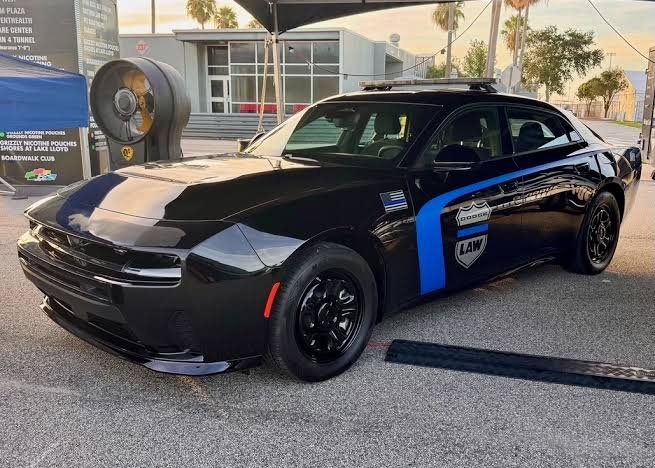
Dodge Law presented an early version of the next Charger police vehicle at the Police Fleet Expo, where it appeared with the equipment expected in a working patrol car rather than merely a police-themed exterior treatment.

Images documented by Team One Public Safety Division show a Charger fitted with law-enforcement equipment, while the organization’s accompanying description says the vehicle is intended to become the 2027 Charger PPV and is targeted for ordering in summer 2027.

Road & Track reported on August 11 that it had contacted Dodge for additional details and noted that it was not possible from the display alone to establish whether the eventual PPV would use the lower- or higher-output version of Dodge’s new straight-six engine.

That uncertainty is important. Reports describing the prototype as a 420-horsepower R/T-based vehicle are plausible and MoparInsiders specifically identifies the display vehicle that way, but Dodge’s publicly available civilian specifications should not automatically be treated as the final police specification.

A more production-relevant prototype than the 2024 teaser

The difference between the two previews is substantial.

The 2024 concept focused attention on the electric Charger Daytona as a possible future patrol vehicle. The 2026 prototype instead points toward the gasoline-powered SIXPACK Charger as Dodge’s more immediate route back into mainstream pursuit fleets.

That choice would address one of the practical issues facing agencies considering electrification: patrol vehicles may operate for long shifts, cover large rural territories or be assigned where dedicated charging infrastructure is limited.

That does not prove Dodge has abandoned an electric police Charger. It means only that the vehicle currently being presented as the prospective 2027 PPV is associated with the gasoline-powered Charger platform.

Why the Dodge Charger PPV matters

Dodge-Charger-Policer-768x1024 Dodge Charger PPV Previewed for 2027 as Police Sedan Returns
Dodge Charger Police

The Charger has a long association with North American law enforcement, making the absence of a direct next-generation police replacement strategically important for Dodge.

The new car also arrives in a fleet market increasingly dominated by utility vehicles. A purpose-built Charger would give agencies another sedan-shaped pursuit option, particularly for highway enforcement and other assignments where high-speed stability, acceleration and a lower center of gravity can matter.

For Dodge, the PPV would also extend the commercial role of the new Charger architecture beyond private buyers.

There is another reason the timing matters: the new Charger is fundamentally different from the outgoing police sedan. It replaces the previous HEMI-era formula with Dodge’s 3.0-liter twin-turbo straight-six in its gasoline variants, uses standard all-wheel drive across the current civilian range and adopts a large rear liftback rather than a conventional sedan trunk.

Turning that architecture into a durable police vehicle therefore requires more than adding lights and decals.

Who is affected

The immediate audience is U.S. and potentially Canadian police agencies planning vehicle purchases for 2027 and beyond.

Fleet managers will be looking beyond horsepower. Police vehicles must support prolonged use, substantial electrical loads, communications hardware, partitions, emergency lighting and equipment storage while meeting agency requirements for braking, handling and durability.

Upfitters are another important group. The center console, wiring, prisoner compartment and rear storage area all have to accommodate specialized equipment without compromising officer access or safety.

Dodge and Stellantis also have a commercial interest. A successful PPV would return the Charger nameplate to a specialized fleet category where it had built substantial recognition.

What changes in practical terms

Gasoline power instead of an EV-only approach

Dodge’s current civilian SIXPACK range gives a useful indication of the hardware available to engineers.

The 2026 Charger R/T uses a 3.0-liter twin-turbo SIXPACK standard-output straight-six producing 420 horsepower and 468 lb-ft of torque. The Charger Scat Pack raises output to 550 horsepower and 531 lb-ft. Dodge says its current Charger range comes with standard all-wheel drive.

Those figures should not yet be published as final Charger PPV ratings.

Road & Track specifically noted that the final output was unclear, while Dodge has not released a dedicated final production specification for the police vehicle.

The responsible conclusion is therefore that the PPV is being developed around Dodge’s turbocharged six-cylinder Charger architecture, while the final calibration remains to be confirmed.

A cabin being redesigned around police equipment

The prototype also reveals why police-car development involves more than mechanical performance.

MoparInsiders, citing images supplied by Team One Network’s Jason Meyer, reports that the civilian Charger’s large center console has been removed to create space for radios, emergency-light controllers, computers and other police hardware. The display vehicle also includes a partition behind the front seats.

Some details still look developmental. The prototype reportedly retains its electronic pistol-grip shifter and standard-style rear-door controls, features that could change as Dodge and equipment suppliers refine the vehicle for fleet service.

That is another reason not to describe the Daytona display vehicle as production-ready.

The liftback creates a new packaging challenge

The latest Charger uses what Dodge describes as a “hidden hatch” design, providing up to 37.4 cubic feet of maximum rear cargo area with the seats folded in civilian form.

For police use, however, a hatch connecting the cargo compartment to the passenger area creates a security issue when detainees are carried in the rear.

The displayed PPV addresses that problem with a divider behind the rear seating area and an equipment-storage arrangement in the cargo section, according to MoparInsiders’ examination of the prototype.

If retained in production, that solution could allow agencies to use the Charger’s large hatch opening while keeping police equipment separated from detained passengers.

The technical numbers that matter

Dodge-Charger-PPV-motor-768x1024 Dodge Charger PPV Previewed for 2027 as Police Sedan Returns
Dodge Charger PPV motor

For now, there are two different categories of figures readers should keep separate.

Confirmed for the civilian 2026 Charger: the standard-output SIXPACK produces 420 hp and 468 lb-ft, while the high-output version produces 550 hp and 531 lb-ft. Both two- and four-door versions are offered, and Dodge lists AWD as standard across the current Charger range.

Reported for the future PPV: Team One says AWD will be standard and that ordering is targeted for summer 2027.

What has not been officially finalized in publicly available Dodge specifications includes the PPV’s exact horsepower rating, police suspension calibration, brake specification, cooling package, electrical capacity, performance certification, equipment packages and price.

Those missing numbers will ultimately matter more to fleet buyers than the prototype’s appearance.

What is confirmed — and what is not

Confirmed: a next-generation police-equipped Charger has now appeared in front of the police-fleet industry, Team One identifies it as the 2027 Charger PPV, and a summer 2027 order window is being targeted. Standard AWD is also part of the information being communicated with the display vehicle.

Not yet confirmed in a final Dodge PPV specification: its exact engine output, price, fleet-option structure and final police-duty hardware.

Analysis: the appearance of a substantially upfitted gasoline prototype at a specialist fleet event makes a production return considerably more credible than the 2024 concept alone. It also suggests Dodge is prioritizing a configuration that can enter conventional police fleets without requiring agencies to depend entirely on charging infrastructure.

The context: Dodge has been working toward this return for two years

Dodge’s interest in a next-generation police Charger did not begin this week.

The Dodge Law account showed a police-themed electric Charger concept in 2024, signaling that law-enforcement applications remained under consideration after the previous-generation Charger ended production.

The latest development changes the story because Dodge now has the gasoline SIXPACK Charger in its production lineup. The civilian R/T and Scat Pack provide an AWD, twin-turbo six-cylinder foundation that can potentially be adapted for specialized fleet duty.

MoparInsiders also reported that Dodge CEO Matt McAlear said the company remained focused on the police market and that work was taking place with fleet stakeholders and organizations involved in pursuit-vehicle standards.

The final test will not be the appearance of the prototype. It will be whether Dodge produces a certified vehicle that meets the durability, performance, cost and service requirements of police agencies.

What to watch next

The most important next development will be a formal Dodge or Stellantis announcement containing production specifications.

A final engine rating would settle whether the PPV uses the 420-hp standard-output SIXPACK calibration, a different police-specific tune or another configuration. Police-specific brakes, cooling systems, suspension components and electrical capacity will also be important because pursuit certification depends on much more than straight-line horsepower.

Pricing will be equally significant. Fleet agencies buy vehicles on operating cost, durability and serviceability as well as performance.

Finally, the reported summer 2027 ordering target remains a target rather than a currently open order book. Until Dodge publishes formal fleet ordering information, timing should be described accordingly.

The August 2026 prototype nevertheless answers one important question: Dodge is no longer merely showing what a new Charger police car could look like. It is demonstrating how the new-generation car could be adapted to real police work. The next stage is proving that configuration can meet fleet standards—and turning the prototype into an orderable PPV.

Comments

No comments yet. Why don’t you start the discussion?

    Leave a Reply

    Your email address will not be published. Required fields are marked *