
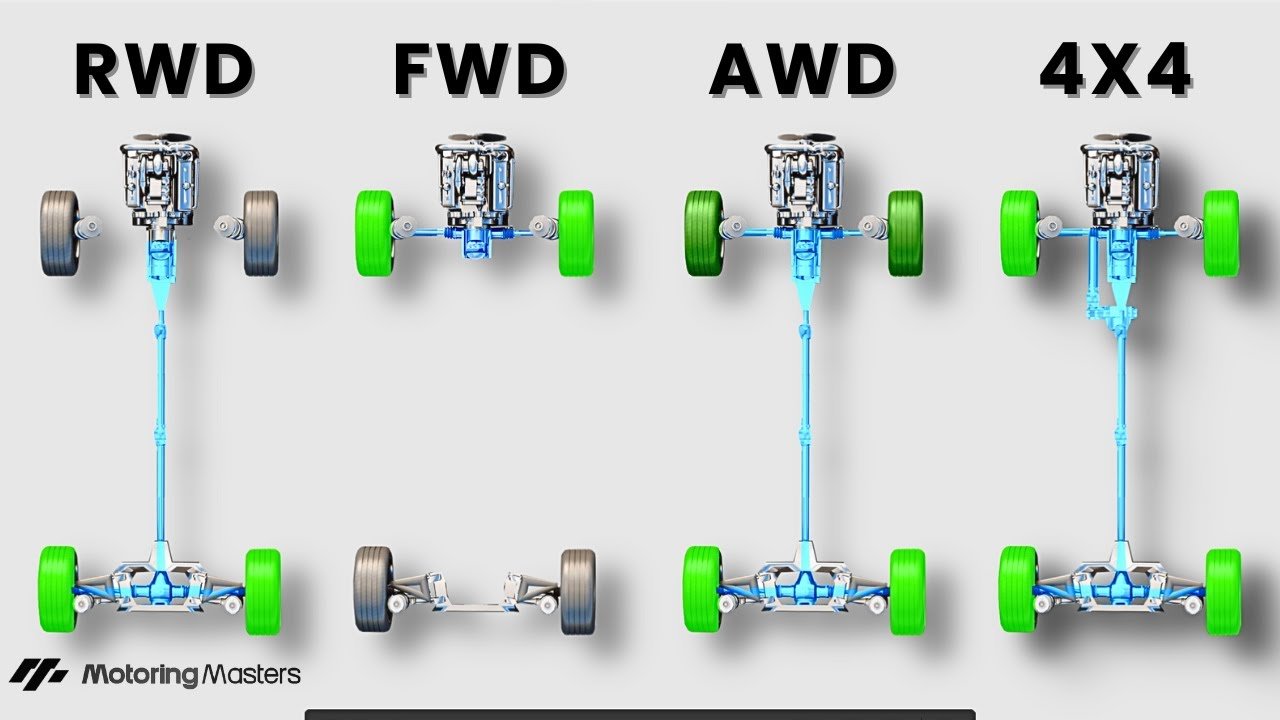
Traction avant, propulsion ou transmission intégrale : la configuration qui transmet la puissance aux roues influence le comportement d’une voiture, son efficacité et son aptitude à évoluer sur différents types de routes. Voici les principales différences.
La Toyota Crown 2027 illustre justement ce choix avec une transmission intégrale de série.
Traction avant (FWD)
La traction avant est très répandue sur les voitures du quotidien. Le moteur entraîne les roues avant, ce qui permet une architecture compacte, légère et généralement moins coûteuse. Ses avantages comprennent une bonne consommation, davantage d’espace intérieur et une motricité correcte sous la pluie et sur neige légère, notamment parce que le poids du moteur repose sur les roues motrices. En conduite soutenue, la voiture peut toutefois avoir tendance au sous-virage.
Propulsion (RWD)
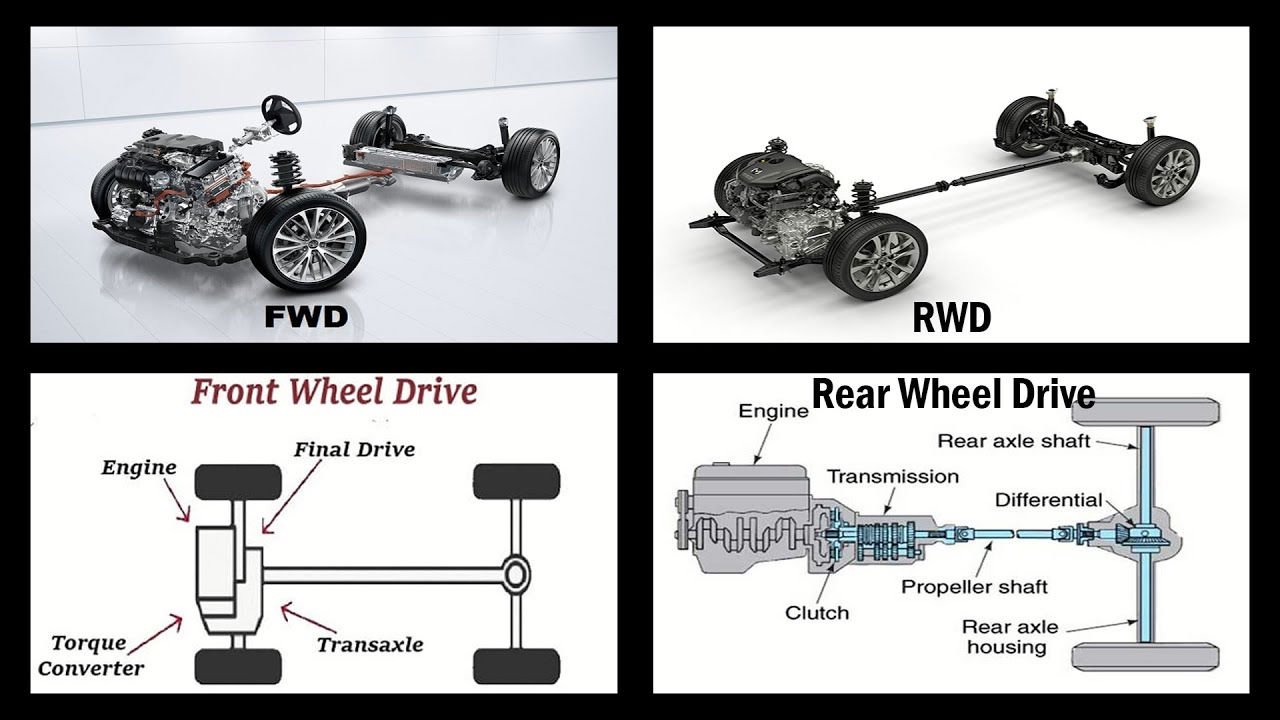
La puissance est transmise aux roues arrière tandis que les roues avant se concentrent davantage sur la direction. Cette architecture favorise l’équilibre des masses, le comportement dynamique, les performances et le remorquage. Elle est donc fréquente sur les voitures sportives, les pick-up et certaines berlines haut de gamme. En revanche, la motricité peut être moins bonne sur neige ou verglas sans pneus adaptés et contrôle de traction.
Transmission intégrale (AWD)
Les quatre roues peuvent recevoir de la puissance, en permanence ou seulement lorsque le système le juge nécessaire. La transmission intégrale offre une meilleure motricité sur les surfaces glissantes et facilite les accélérations sur neige ou gravier. Elle entraîne toutefois davantage de poids et peut augmenter la consommation, le prix d’achat et certains coûts d’entretien. À noter : l’AWD aide surtout à accélérer sur neige ; elle ne remplace pas de bons pneus hiver pour freiner ou tourner.
Quelle configuration choisir ?
- Traction pour privilégier le prix, l’efficacité et les trajets quotidiens dans un climat modéré.
- Propulsion pour rechercher un comportement dynamique, des performances ou une capacité de remorquage importante.
- Transmission intégrale si vous roulez régulièrement sur neige, verglas, gravier ou routes humides et pentues.
À retenir
Il n’existe pas de configuration universellement adaptée à tous les conducteurs. Le meilleur choix dépend du climat, de l’usage et des priorités. Pour la sécurité hivernale, des pneus adaptés restent essentiels, quelle que soit la transmission.