

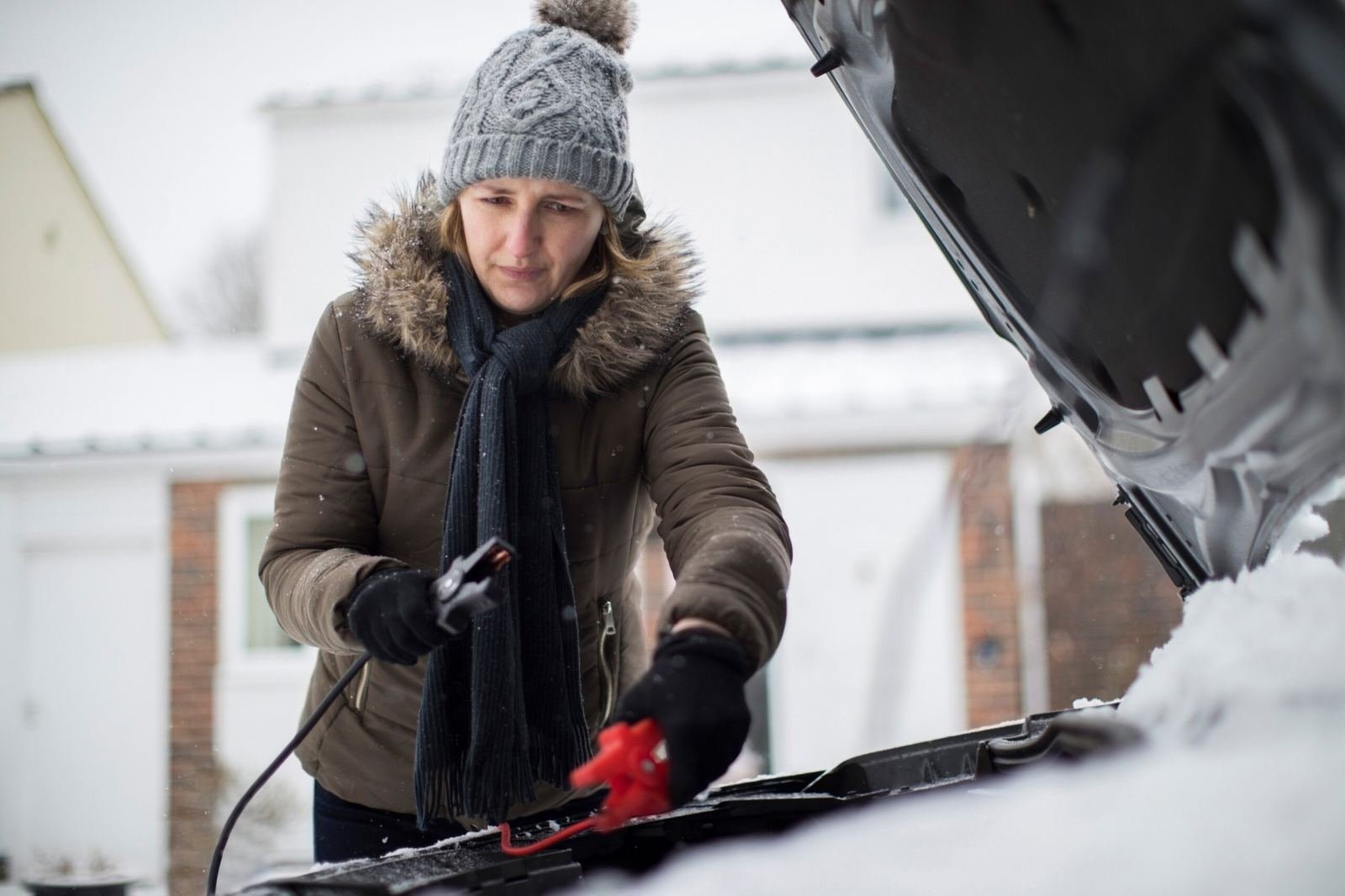
Températures négatives, routes verglacées et pannes imprévues peuvent transformer un trajet ordinaire en situation dangereuse. Quelques gestes simples avant l’hiver peuvent améliorer la sécurité, protéger le véhicule et réduire le risque de réparations coûteuses.
Pourquoi préparer sa voiture pour l’hiver ?
Le froid sollicite davantage plusieurs éléments du véhicule. La batterie perd en puissance, la pression des pneus diminue, certains fluides peuvent geler et l’adhérence baisse sur les chaussées glissantes.
1. Montez des pneus hiver adaptés
Les pneus sont le seul point de contact entre la voiture et la route. Les pneus hiver utilisent une gomme et une sculpture conçues pour rester efficaces par basses températures.
À vérifier avant l’hiver
- Profondeur et usure de la bande de roulement.
- Montage avant les premières fortes chutes de neige.
- Absence de fissures ou dommages.
- Adaptation des pneus aux conditions climatiques locales.
2. Faites tester la batterie
Une batterie vieillissante peut démarrer correctement en été puis montrer ses limites lorsque les températures chutent. Un contrôle avant l’hiver réduit le risque de panne par temps froid.
3. Contrôlez régulièrement la pression des pneus
Le froid fait baisser la pression. En règle générale, une diminution d’environ 5,5 °C peut entraîner une perte proche de 1 psi. Vérifiez donc régulièrement la pression et respectez la valeur recommandée par le constructeur.
4. Utilisez des fluides adaptés au froid
- Lave-glace : choisissez une formule hiver qui ne gèle pas.
- Liquide de refroidissement : vérifiez la concentration d’antigel.
- Carburant : garder une réserve suffisante peut être utile en cas de bouchon ou de retard.
5. Préparez un kit d’urgence
- Couverture chaude.
- Gants et vêtements supplémentaires.
- Lampe avec piles de rechange.
- Grattoir à glace.
- Petite pelle.
- Câbles de démarrage ou démarreur portable.
- Eau et aliments non périssables.
6. Adaptez votre conduite sur route glissante
- Réduisez la vitesse en fonction des conditions.
- Augmentez les distances de sécurité.
- Freinez et accélérez progressivement.
- Méfiez-vous du verglas sur les ponts, zones ombragées et routes non traitées.
- Évitez le régulateur de vitesse lorsque l’adhérence est mauvaise.
7. Faites une inspection rapide
- Vérifiez les essuie-glaces.
- Contrôlez les feux avant et arrière.
- Testez les freins.
- Assurez-vous que le chauffage et le désembuage fonctionnent.
- Inspectez les courroies, durites et niveaux de fluides.
À retenir
Préparer sa voiture avant l’hiver ne demande pas forcément beaucoup de temps. Des pneus adaptés, une batterie en bon état, une pression correcte et une conduite prudente réduisent fortement le risque de panne et de perte de contrôle.