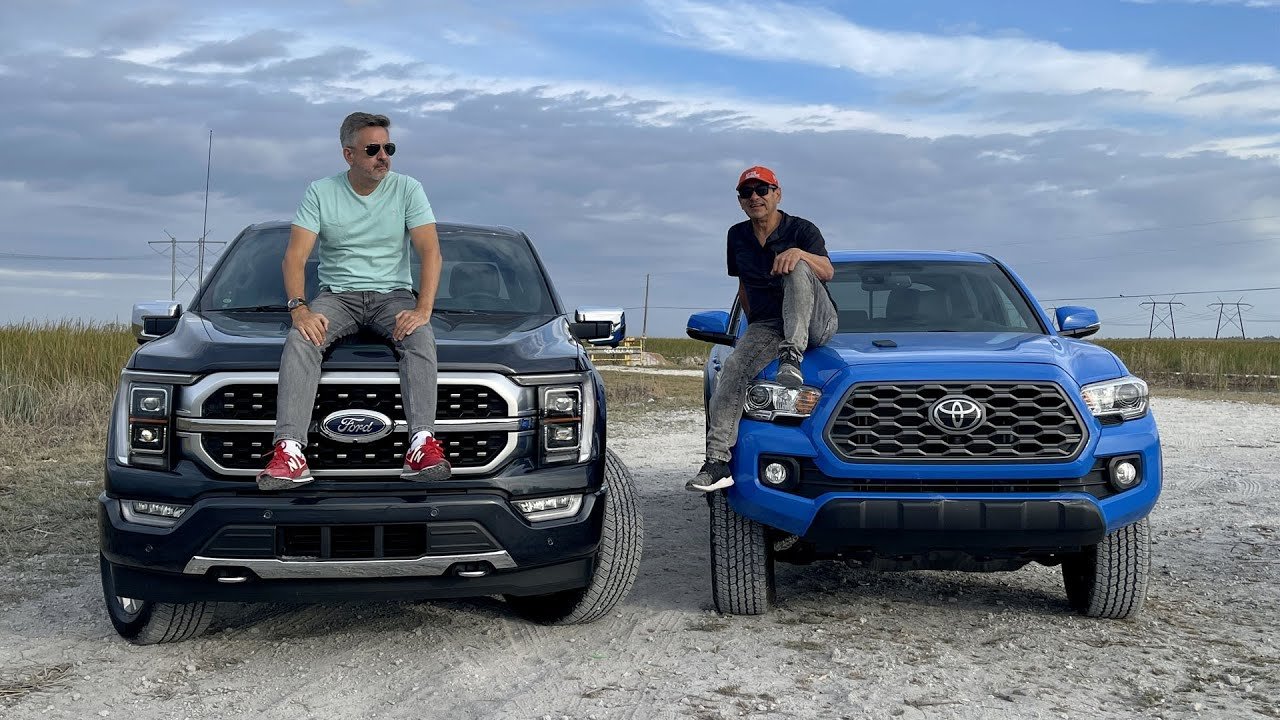
Shopping for a pickup truck in 2026 is no longer just about raw power. Comfort, daily usability, fuel efficiency, resale value, and lifestyle needs all play a major role. Two names dominate the conversation: the Toyota Tacoma, known for legendary reliability and off-road credibility, and the Ford F-150, the best-selling full-size truck in America. While they belong to different segments, many buyers still cross-shop these two icons. So which one actually fits your life?
Size, Comfort, and Everyday Driving
The most obvious difference between the two trucks is size. The Ford F-150 is a full-size pickup, and it feels that way the moment you step inside. The cabin is wide, airy, and extremely comfortable. Rear-seat space is generous enough for adult passengers on long trips, and modern trims offer massive touchscreens, premium materials, and advanced driver assistance features. For families or professionals who spend hours on the road, the F-150 feels closer to a luxury SUV than a work truck.
However, that size can quickly become a drawback. Navigating tight city streets, parking garages, or crowded shopping centers can be stressful. If most of your driving happens in urban areas, the F-150’s footprint may feel overwhelming.
The Toyota Tacoma, on the other hand, is far easier to live with day to day. Its mid-size dimensions make parking and maneuvering effortless, and it feels more nimble in traffic. While front-seat comfort is excellent, the rear seats—especially in the Double Cab—are better suited for kids or short trips. For buyers who want a truck that doesn’t feel oversized, the Tacoma strikes a practical balance.
Power, Towing, and Real-World Capability
This is where the Ford F-150 clearly dominates. With engine options including EcoBoost V6s, a 5.0L V8, and the PowerBoost hybrid, the F-150 can tow over 13,000 pounds when properly equipped. If you regularly haul heavy trailers, boats, campers, or construction equipment, the F-150 is not just the better choice—it’s the necessary one.
The 2024 Toyota Tacoma, fully redesigned, now features turbocharged engines and the i-FORCE MAX hybrid powertrain. While significantly more powerful than previous generations, the Tacoma tops out at around 6,500 pounds of towing capacity. That makes it perfect for lifestyle towing: jet skis, dirt bikes, small campers, and home-improvement loads. It delivers strong performance without the fuel consumption and bulk of a full-size truck.
Off-Road Performance, Reliability, and Resale Value
When the pavement ends, the Tacoma comes into its element. Models like the TRD Pro and Trailhunter are built for technical off-road terrain, with excellent suspension tuning and a compact footprint that fits narrow trails and rocky paths. This makes the Tacoma a favorite among outdoor enthusiasts who prioritize exploration over brute force.
The F-150 counters with trims like the Raptor and Tremor, which are incredibly capable in wide-open spaces, deserts, and high-speed off-road driving. However, their width can be a disadvantage in tight forest trails.
Reliability and resale value are where Toyota truly shines. The Tacoma is famous for its longevity and minimal depreciation. The so-called “Tacoma Tax” exists for a reason—these trucks hold their value exceptionally well. The Ford F-150 is reliable and easy to maintain, but full-size trucks typically depreciate faster than mid-size Toyotas.